
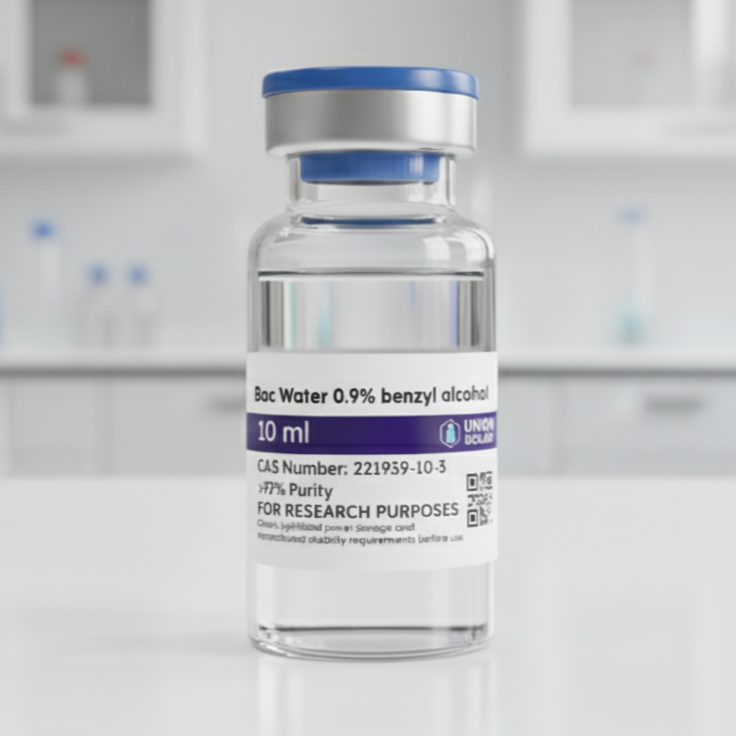
Sterile Water 10ml
Original price was: £8.00.£6.00Current price is: £6.00.
Out of stock
You’ll get an email when it’s back in stock.
Sterile Water (10 mL)
Product Overview
Sterile Water (10 mL) is a high-purity laboratory reagent designed for scientific research and analytical applications. Researchers commonly use this sterile, non-pyrogenic solution to prepare laboratory samples, reconstitute compatible research compounds, and support controlled experimental procedures. Moreover, its clear, colourless appearance and consistent composition help maintain accuracy across a wide range of laboratory workflows.
Manufacturers produce Sterile Water (10 mL) under strict quality standards to ensure dependable performance from batch to batch. Additionally, they package each vial to help preserve sterility during routine laboratory handling. As a result, researchers can work with confidence while following established laboratory protocols.
Specifications
- Product Name: Sterile Water
- CAS Number: 7732-18-5
- Molecular Formula: H₂O
- Molecular Weight: 18.02 g/mol
- Volume: 10 mL
- Form: Clear, sterile solution
- pH: 5.7 (Range: 4.5-7.0)
- Preservative: None
- Packaging: Multi-dose container for repeated withdrawals
Storage & Stability
Store Sterile Water at 20-25 °C and protect the vial from direct light. Furthermore, keep the container tightly closed when it is not in use to help maintain product quality. After opening, use the contents within 28 days while following appropriate aseptic laboratory techniques. Likewise, minimise contamination during repeated withdrawals to preserve the integrity of the solution.
Why Choose Sterile Water (10 mL)?
- High-purity sterile laboratory solution
- Clear, ready-to-use formulation
- Consistent quality for research applications
- Convenient multi-dose vial
- Stable under recommended storage conditions
- Suitable for a wide range of scientific research workflows
Research Use Only
Sterile Water (10 mL) is available exclusively for laboratory research purposes. It is not intended for human or veterinary use. Furthermore, researchers must not use this product for diagnostic, therapeutic, or medical applications. Instead, they should handle and store it according to established laboratory safety procedures and scientific best practices.
| Weight | 100 g |
|---|---|
| Dimensions | 2.5 × 2.5 × 5 cm |
Related products
-
Liquids & Solvents
Bac Water (0.9% benzyl alcohol) 10ml
Original price was: £8.00.£6.00Current price is: £6.00.


