
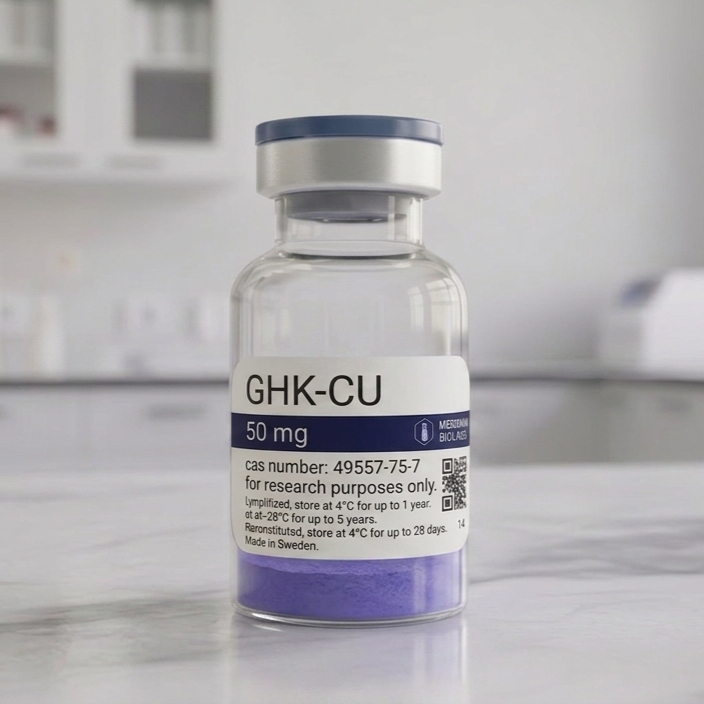
GHK-Cu 50 mg
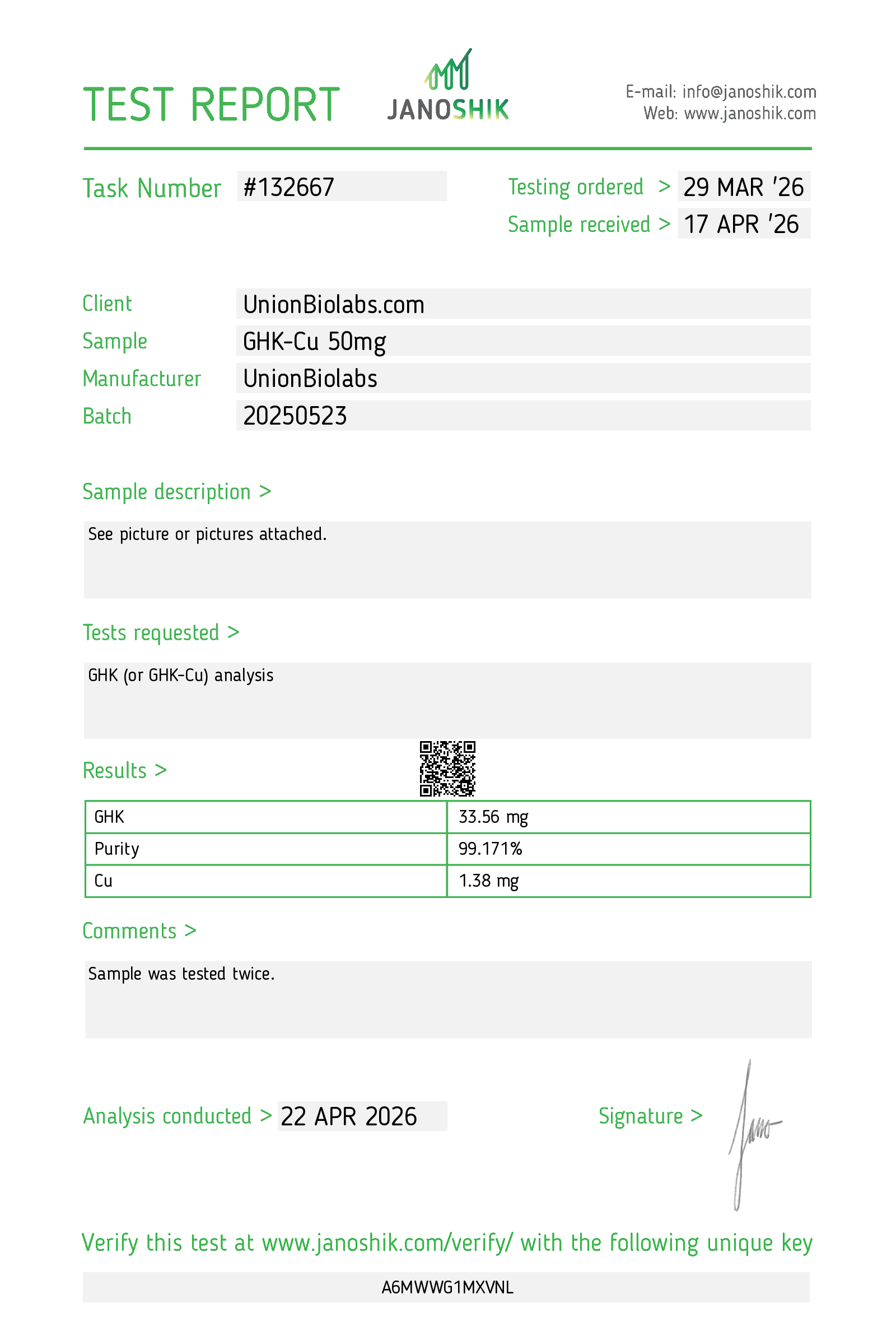
Third-Party Testing: https://janoshik.com/tests/132667-Sample_3_A6MWWG1MXVNL
CAS Number: 49557-75-7 (free GHK tripeptide base)
Synonyms: Copper Tripeptide-1, Cu-GHK, Glycyl-L-Histidyl-L-Lysine Copper(II) Complex, Prezatide Copper, Tripeptide-1
Copper Quantity: 50 mg (lyophilised)
Key Features
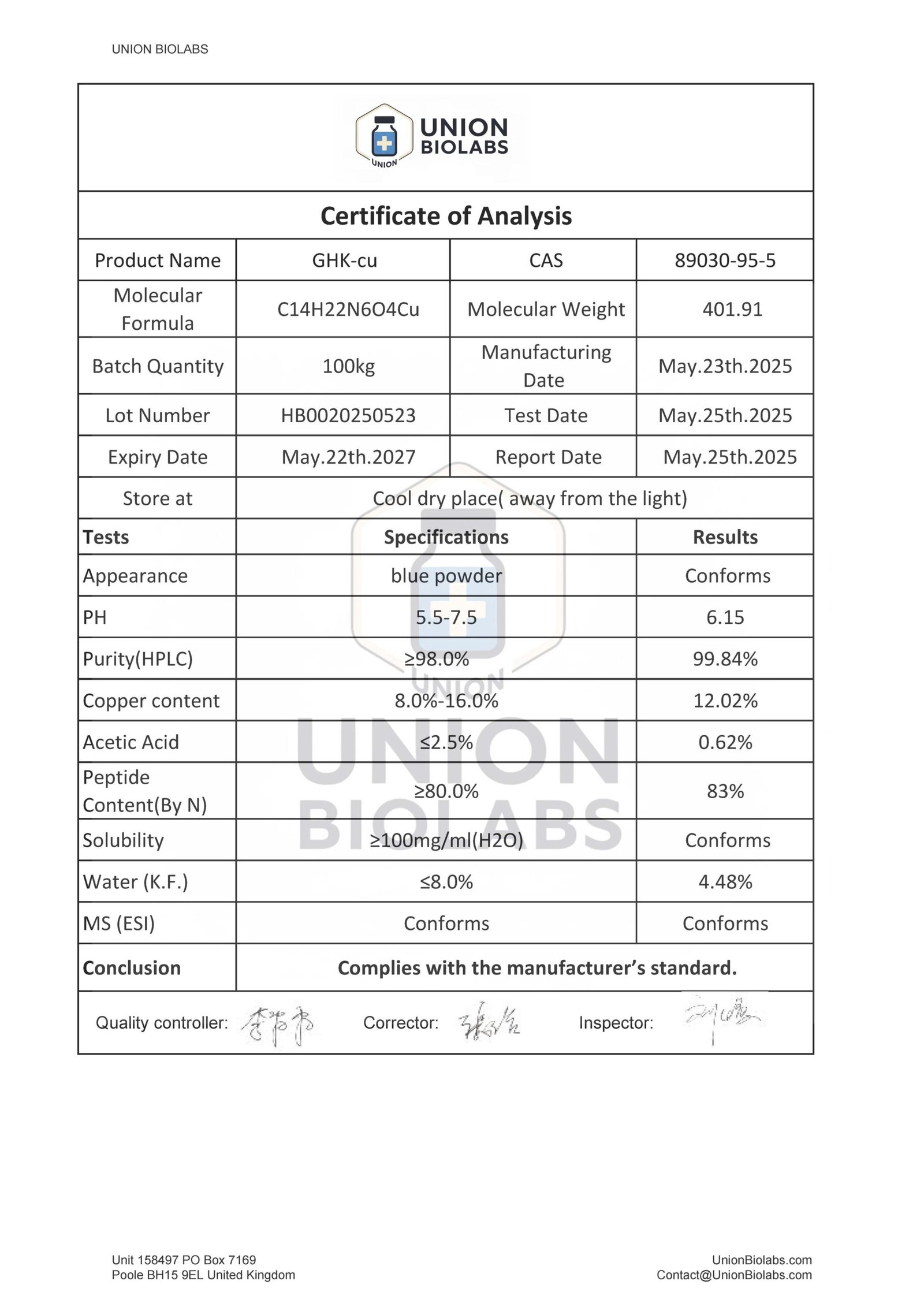
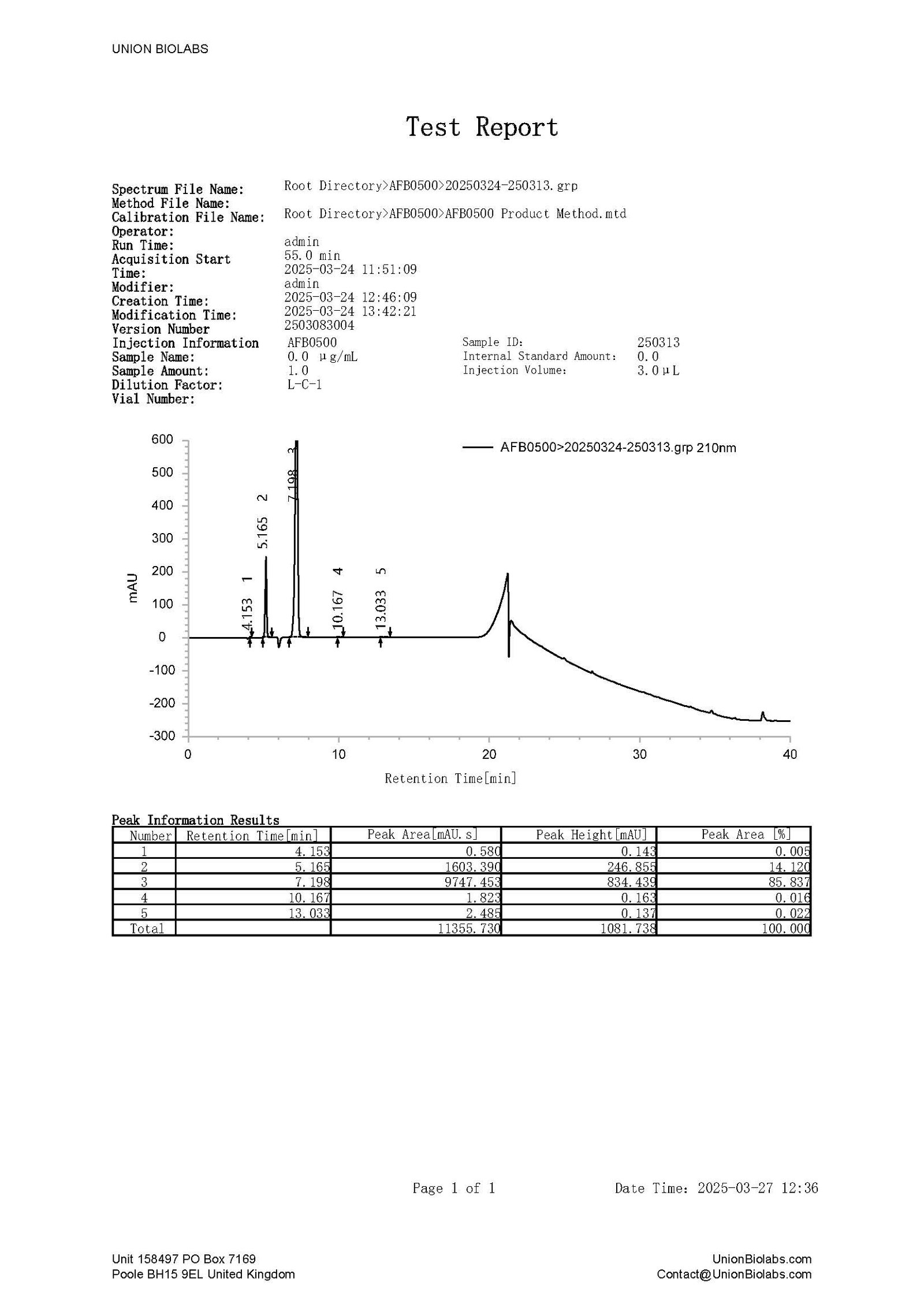
- Purity: ≥ 98% (HPLC-verified)
- Identity Confirmation: Mass Spectrometry (MS) verified
- Endotoxin: ≤ 5 EU/mg
- Form: Freeze-dried (lyophilised) powder
- Appearance: Characteristic blue to blue-violet powder
- Documentation: Certificate of Analysis (COA) supplied with every lot
Peptide Information
GHK-Cu is a copper-binding tripeptide complex consisting of the amino acid sequence Gly-His-Lys coordinated with a copper(II) ion. Furthermore, this naturally occurring peptide complex has become one of the most extensively studied copper peptides within biochemical research.
Sequence: Gly-His-Lys (GHK·Cu²⁺)
Length: 3 amino acid residues
Molecular Formula: C₁₄H₂₄CuN₆O₄ (copper complex)
Molecular Weight: 401.9 g/mol
Solubility: Highly water-soluble and readily dissolves in standard aqueous laboratory buffers
Classification: Copper-binding tripeptide complex intended for laboratory research workflows
Peptide Origin and Derivation
GHK-Cu is the copper(II) complex of glycyl-L-histidyl-L-lysine (GHK), a naturally occurring tripeptide first identified in human plasma during the 1970s. Since its discovery, researchers have detected GHK in several biological fluids, including plasma, saliva, and urine. Moreover, the peptide possesses a strong natural affinity for copper ions, allowing it to readily form stable copper complexes under physiological conditions.
The GHK tripeptide spontaneously chelates Cu²⁺ ions at physiological pH to create the GHK-Cu complex. Consequently, the resulting molecule has become a major subject of scientific investigation across multiple research disciplines. In addition, published literature spanning more than five decades has documented its structure, copper-binding characteristics, and biochemical properties.
Research has also demonstrated that endogenous GHK concentrations decline with age. For example, plasma concentrations may average approximately 200 ng/ml in younger adults and gradually decrease over time. Therefore, GHK-Cu continues to attract considerable interest in studies involving naturally occurring peptides and metal-binding biological compounds.
To ensure consistency, GHK-Cu used in laboratory settings is produced synthetically under controlled manufacturing conditions. As a result, researchers benefit from defined copper loading, consistent peptide identity, controlled purity, and excellent batch-to-batch reproducibility.
Quality and Manufacturing Standards
Each batch of GHK-Cu 50 mg is manufactured using controlled peptide synthesis techniques designed to deliver reliable analytical performance. Furthermore, rigorous quality-control procedures help verify the identity and purity of every production lot.
Identity confirmation is performed using mass spectrometry, while purity is assessed through HPLC analysis. Additionally, endotoxin levels are monitored to ensure compliance with established laboratory specifications. The resulting material exhibits the characteristic blue coloration associated with intact copper coordination.
Moreover, synthetic production enables precise control over peptide composition and copper-binding stoichiometry. Consequently, researchers receive a highly characterised material supported by full batch documentation and traceability.
Reconstitution and Handling
GHK-Cu should be reconstituted under sterile laboratory conditions using sterile water or a compatible aqueous buffer. Following reconstitution, the characteristic blue colour serves as a useful indicator of intact copper coordination.
Additionally, aliquoting solutions after reconstitution can help minimise repeated freeze-thaw cycles. Researchers should also avoid strong reducing agents and chelating compounds that may interfere with copper binding. For short-term laboratory use, reconstituted solutions may be stored at 2-8°C.
Storage and Stability
For long-term storage, GHK-Cu should be kept at -20°C in a dry environment protected from direct light exposure. However, short-term storage at refrigerated temperatures between 2-8°C is generally acceptable.
Furthermore, avoiding repeated freeze-thaw cycles can help maintain product integrity over time. Protecting the material from excessive heat, moisture, and light exposure may also contribute to preserving copper coordination and overall stability.
Why Choose GHK-Cu 50 mg?
GHK-Cu 50 mg offers a highly characterised copper tripeptide complex supported by comprehensive quality-control testing. Furthermore, its defined copper stoichiometry, HPLC-verified purity, and MS-confirmed identity provide confidence in laboratory research applications.
Key benefits include:
- High-purity synthetic copper tripeptide complex
- Defined Cu²⁺ coordination stoichiometry
- Mass spectrometry verified identity
- HPLC-confirmed purity of ≥ 98%
- Characteristic blue colouration confirming copper coordination
- Full batch traceability with COA documentation
- Lyophilised format for convenient storage and handling
- Extensively documented within biochemical literature
Intended Use
For laboratory research only. Not for human or veterinary use. Not approved for diagnostic, therapeutic, cosmetic, or medical applications. Users should follow appropriate laboratory safety procedures and ensure compliance with all applicable local regulations regarding the importation, possession, handling, and use of research peptides.
Search-Optimised Keywords
GHK-Cu peptide, copper peptide, copper tripeptide-1, Cu-GHK, GHK-Cu 50 mg, Gly-His-Lys copper peptide, prezatide copper, glycyl-histidyl-lysine copper complex, GHK research peptide, copper peptide laboratory reagent, synthetic copper tripeptide, lyophilised GHK-Cu, laboratory research peptide.
| Weight | 50 g |
|---|---|
| Dimensions | 1 × 1 × 3 cm |


