
DSIP (Delta Sleep-Inducing Peptide)
DSIP (Delta Sleep-Inducing Peptide) is a synthetic peptide extensively studied for its role in sleep regulation, neurophysiological activity, and stress response. Researchers focus on its involvement in circadian rhythm modulation, central nervous system signaling, and peptide-based communication within the body. Its unique structure allows DSIP to support investigations into neurological pathways, brain function, and sleep-related mechanisms. Because of its versatility, it remains a highly valuable compound for controlled laboratory studies exploring biochemical processes and neurophysiology.
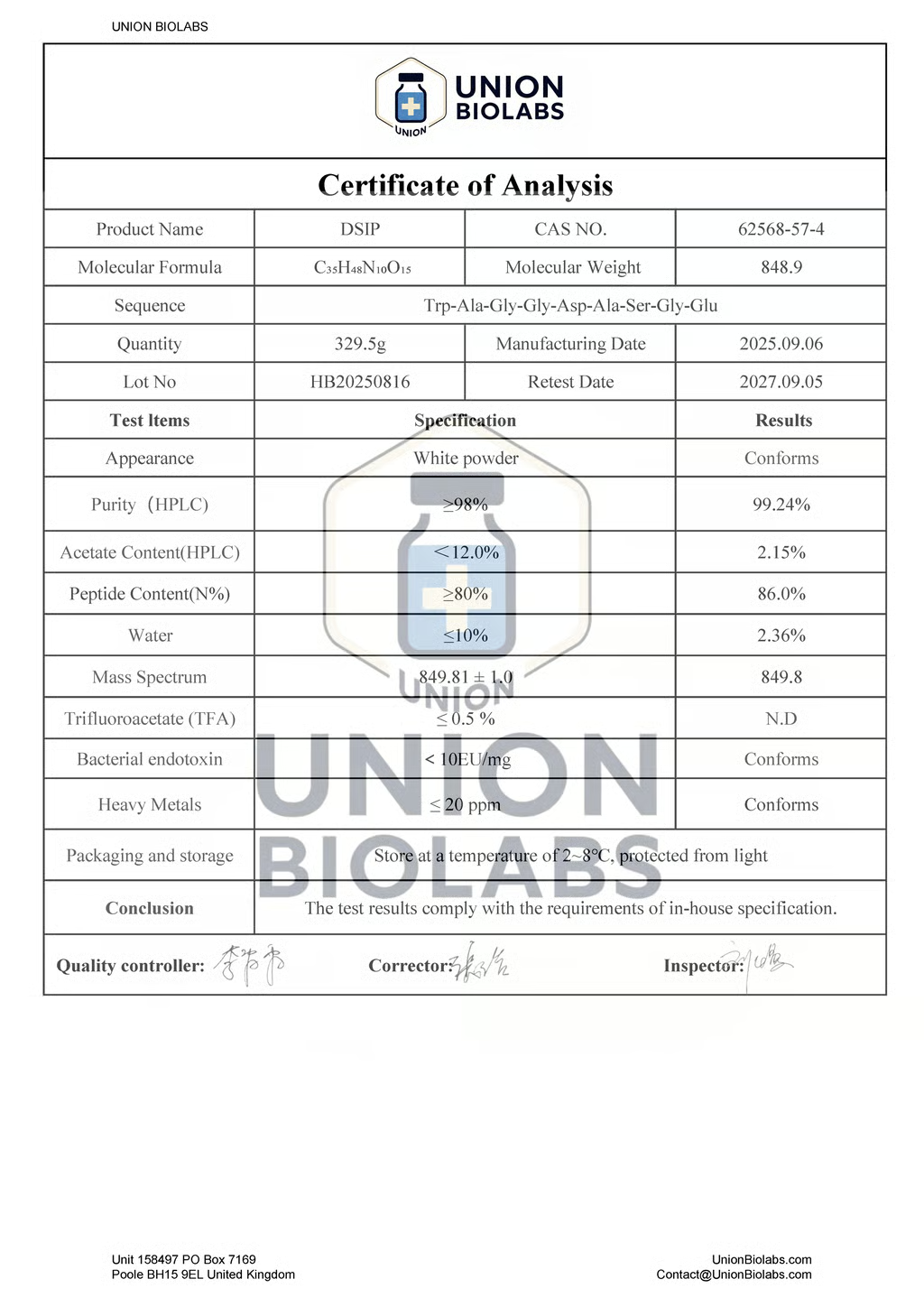
CAS Number: 62568-57-4
UNII: YN28Z5YZ73
Molecular Formula: C₃₅H₄₈N₁₀O₁₅
Molecular Weight: ~848.8 g/mol
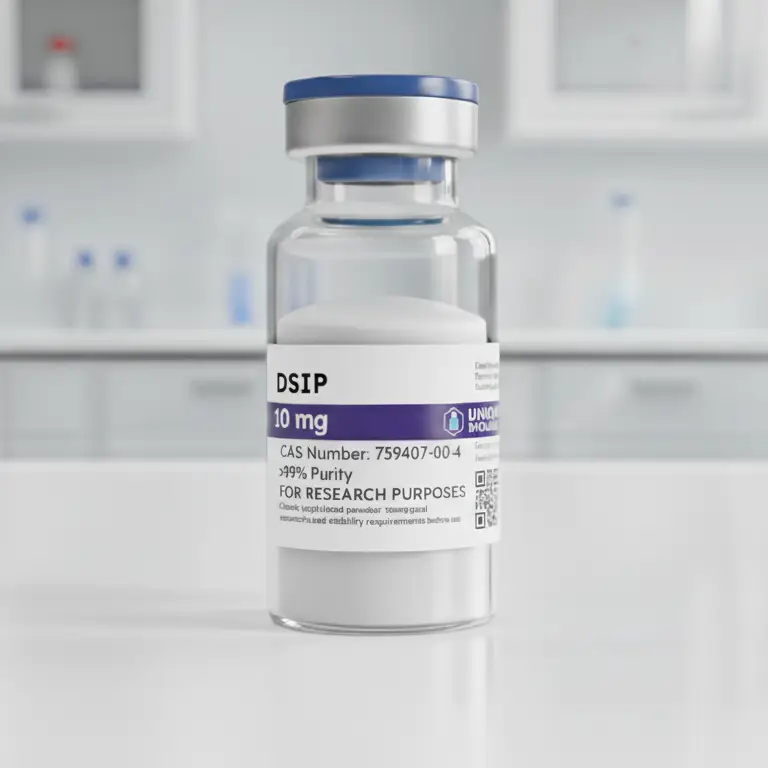
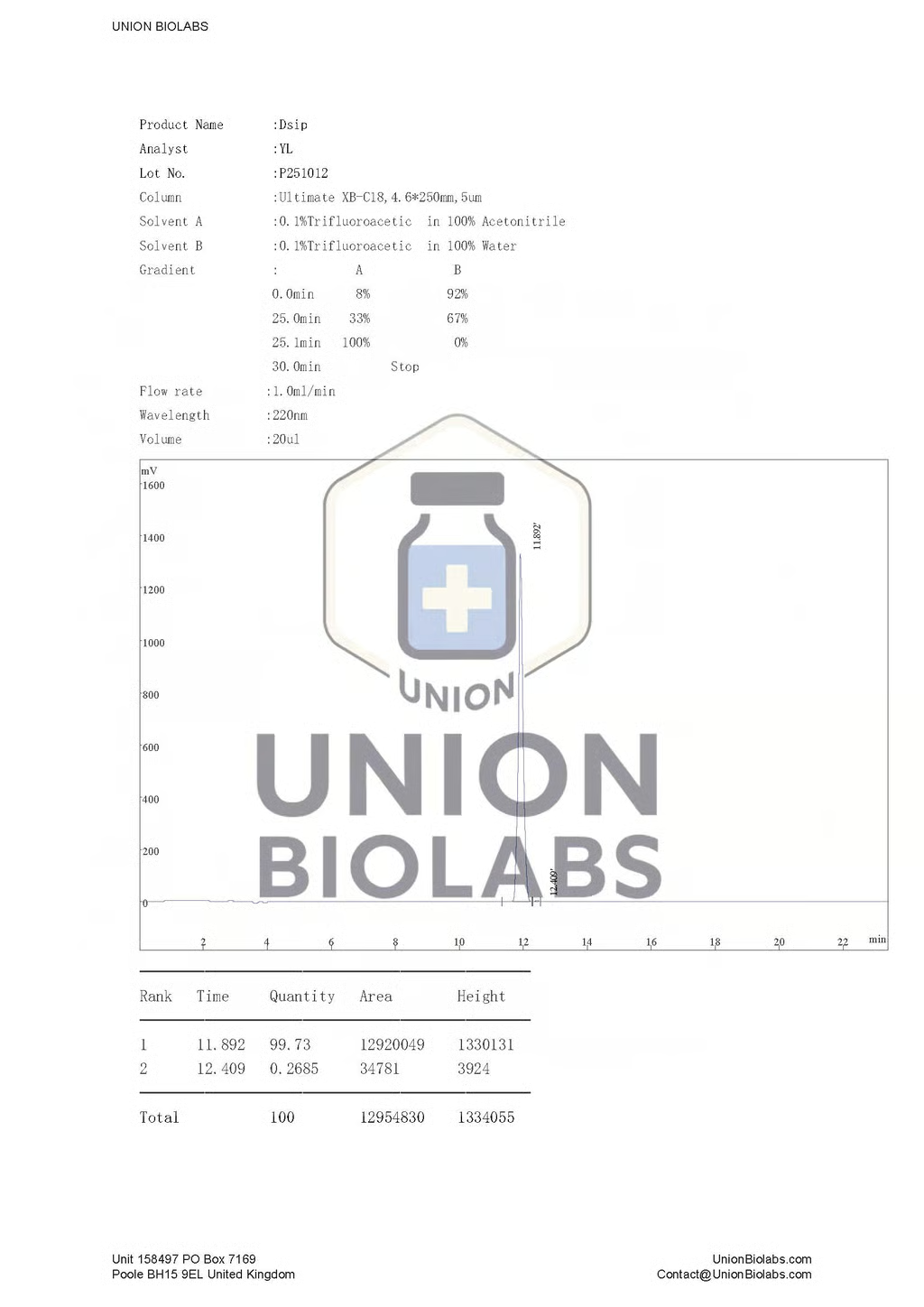
This product is supplied as high-purity, lyophilised DSIP. The freeze-dried powder ensures long-term stability, simplifies storage, and allows flexible reconstitution according to specific research requirements. Each batch undergoes strict quality control measures to maintain consistency and reliability across experiments. Purity is verified at ≥99% using HPLC, ensuring researchers can achieve accurate and reproducible results.
Specifications:
Content: DSIP (lyophilised)
Lot No: HB20250816
Form: Freeze-dried powder
Purity: ≥99% (HPLC-verified)
COA: Certificate of Analysis provided for each batch
Storage: –20°C in a temperature-controlled facility until dispatch
Origin: UK-stocked for rapid Royal Mail delivery
Intended Use: Laboratory research only. Not for human consumption
Each order includes a Certificate of Analysis, providing complete batch traceability and detailed verification data. The product remains stored at –20°C in a controlled environment before dispatch to preserve peptide integrity and performance. Researchers benefit from its reliable quality, high stability, and verified purity, making DSIP suitable for a variety of laboratory applications, including biochemical assays, peptide research, and neurophysiological studies.
DSIP is strictly intended for laboratory research. It is not approved for human or veterinary use and must not be used for consumption. Proper laboratory safety practices should always be followed when handling this peptide.
| Weight | 20 g |
|---|---|
| Dimensions | 1 × 1 × 3 cm |
